
All articles by Ky Nikitha

Ky Nikitha
Glass healing
Bouncing, bending and bonding to bone, glass is looking more and more like a miracle material. The liquid-like solid is showing its worth in everything from healing wounds to replacing intervertebral discs. Tim Gunn talks to Professor Julian Jones of Imperial College London and Professor Aldo Boccaccini from the University of Erlangen-Nuremberg about the properties of bioactive glass that make it so valuable for medical devices.
The shape of things to come
While the world continues to come to terms with the potential of 3D printing, engineers have been working on introducing a whole new dimension to additive manufacturing processes. Tim Gunn talks to Dr Andrew Weems of the University of Birmingham, Professor Lorenzo Moroni of Maastricht University, and Dr Christophe Marquette of Lyon’s 3D Fabric of Advanced Biology laboratory about what four-dimensional printing can do to disrupt the medical device market.
Sweat the small stuff
An interdisciplinary team of scientists at the University of Massachusetts Amherst has produced a new class of sustainable electronic materials, which may lead to a greener future in biomedical and environmental sensing. Alexander Smith, a biomedical engineering PhD student and the founder of the start-up e-Biologics, speaks to Abi Millar about the value of these materials for medical devices.
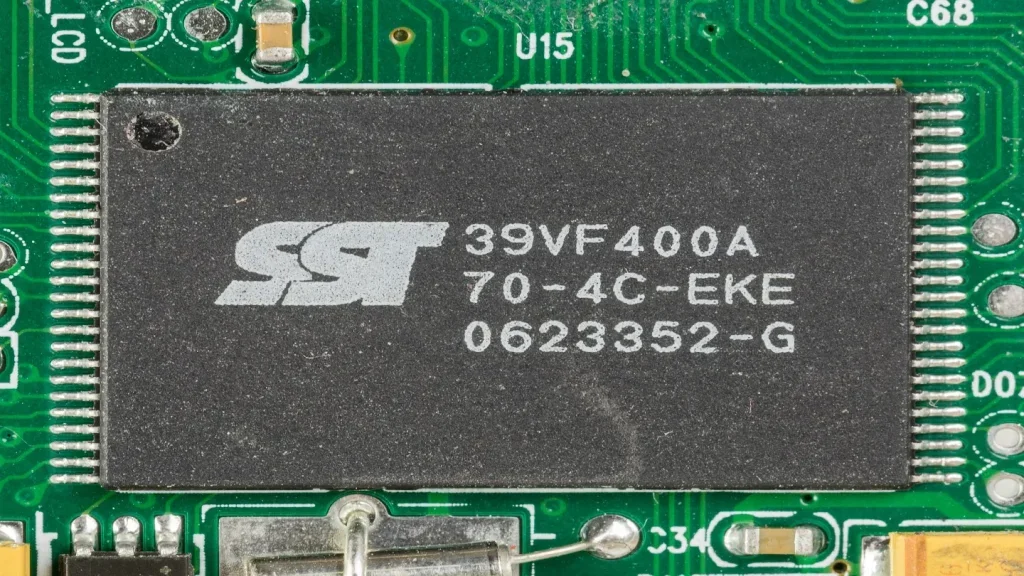
The heart of the problem
The vast majority of semiconductors in medical devices are made from silicon, which, though the cheapest material available, is not the most efficient. Now, a team of engineers at the Massachusetts Institute of Technology (MIT) has developed a new way to fabricate ultra-thin semiconducting films made from a host of exotic materials. Michael Shaw talks to Jeehwan Kim, the university’s class of 1947 career development assistant professor in the departments of mechanical engineering and materials science and engineering, about the potential applications of this research.
Next evolutionary step
Thanks to bioelectronics, devices are starting to replace drugs for a wide range of conditions. Bioelectronic medicine explores how targeted electrical signals can harness the body’s natural mechanisms to diagnose and treat a range of diseases, helping the body heal itself. Emma Green speaks to Lan Yue, assistant professor of research at USC, about the potential of this technology for medical device manufacturers.

The power to succeed
In vivo networking (IVN) is a novel approach to powering – and communicating with – implanted medical devices. Jim Banks talks to assistant professor Fadel Adib, one of the researchers involved in an IVN project at MIT, about how the research could bring about a paradigm shift.
Smash the ultrasound barrier
Scientists at the University of British Columbia, Canada, have developed a portable ultrasound device that can connect to a smartphone and costs only $100. The new transducer can be used to look at any part of the body, producing instant and clear images. Research lead Carlos Gerardo talks to David Callaghan about the potential for this new device, which includes patients wearing it for monitoring purposes.
Myopic medicine
In order to achieve sustainability in manufacturing operations, it needs to be incorporated in all stages of the supply chain. One key aspect is obtaining sustainable components from eligible suppliers. Recently, this topic has gained greater attention from industry and academia. Ben Wicks from Team Consulting speaks to Emma Green about the status of sustainability within medical device manufacturing.
Break the fourth wall
Since we entered the fourth age of the industrial revolution, known as industry 4.0, manufacturers have begun to explore a wide range of new technologies. Karen Taylor, director of the Centre for Health Solutions at Deloitte, speaks to Stephanie Webster about how to best implement these technologies into manufacturing processes to maximise efficiency while minimising cost.
Connect the bots
Collaborative robots, or cobots, are a new class of robots that are bridging the gap between fully manual assemblies and fully automated manufacturing lines. Lightweight, flexible, easily programmable and safe to implement, cobots can meet some of the challenges associated with these processes in an efficient and effective way. Astrid Weiss, senior researcher at Vienna University of Technology, speaks to Emma Green about how best to integrate these cobots into manufacturing processes.